In construction and assembly technologies, safe and durable fastening systems are of vital importance. One of the standout solutions in this field is chemical anchoring systems. Unlike traditional mechanical anchors, chemical anchors stand out with their high bonding strength and long-lasting performance.
What is a Chemical Anchor?
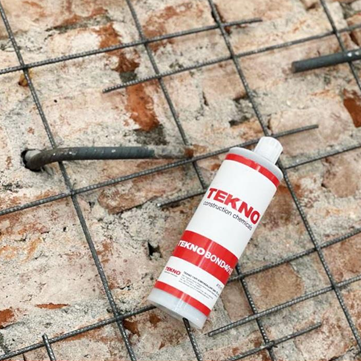
A chemical anchor is a two-component, resin-based fastening system. It typically contains resin and a hardener. During application, these two components are mixed and injected into a pre-drilled hole. Then, the anchor rod or threaded bar placed inside is securely fixed as the chemical cures and hardens.
This system does not cause mechanical expansion, reducing the risk of cracking in the concrete and providing high load-bearing capacity.
Why Choose a Chemical Anchor?
- High Strength: Excellent performance in fastening heavy loads.
- Vibration Resistant: Safe in environments with dynamic loads.
- Wide Application Range: Can be used on various substrates such as concrete, stone, and brick.
- Effective Even in Cracked Concrete: Provides strong adhesion where traditional anchors fail.
- Corrosion Resistant: Offers a long-lasting solution, especially for outdoor use.
Where is it Used?
Chemical anchors are preferred in a wide range of applications, including:
- Rebar connection in reinforced concrete structures
- Installation of railings, pergolas, and signs
- Steel structure connections
- Mounting of machines, shelving, and air conditioning units
- Suspended ceiling, façade, and solar panel systems
How is it Applied?
- Drilling: A hole of the appropriate diameter and depth is drilled into the surface.
- Cleaning: The inside of the hole is cleaned of dust using a brush and compressed air.
- Chemical Injection: Resin is injected into the hole using a cartridge with a mixing nozzle.
- Anchor Placement: The anchor rod is inserted into the resin and fixed in place.
- Curing: No load is applied until the chemical cures (curing time varies depending on temperature).
Which Chemical Anchor Should I Choose?
The type of chemical anchor should be selected based on the application:
- Epoxy-Based: Maximum strength – for heavy structural applications
- Vinylester-Based: Water and moisture resistant – ideal for outdoor use
- Polyester-Based: Cost-effective – for light loads and indoor applications
- Hybrid Resin: Versatile – wide temperature range and fast curing
Conclusion
Chemical anchors are among the most reliable and versatile modern fastening solutions. When applied correctly, they provide durable and secure connections. By selecting the right product for your project needs, you can achieve maximum performance.